

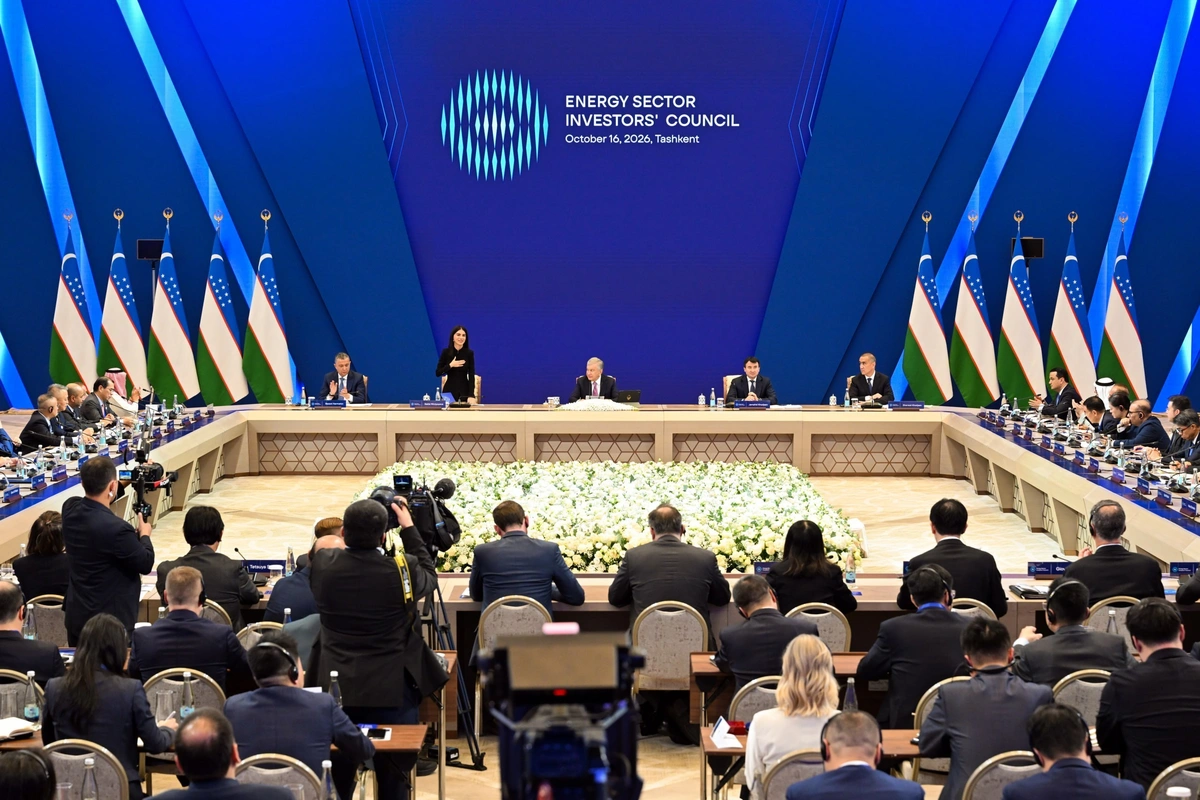
President Shavkat Mirziyoyev announced on 16 October the creation of a new Investors’ Council for the fuel and energy sector, appointing Saida Mirziyoyeva — Head of the Presidential Administration and his daughter — to chair the body. The decision came during an open dialogue with representatives of major international energy companies and was framed by the president as a direct response to what he described as entrenched bureaucracy and corruption impeding investment projects.
The president’s stated rationale was unusually candid. According to Gazeta.uz, Mirziyoyev told investors:
The president added that he would maintain constant personal oversight of the council’s work, with Saida Mirziyoyeva serving as its chair on a day-to-day basis.
The council’s stated mandate is to resolve operational bottlenecks that investors encounter at every stage of project implementation — from land allocation and grid connection to the issuance of technical specifications and the final commissioning of energy facilities. According to the president, even a single delay in any of these administrative steps can jeopardise an entire project. The new body is intended to provide a direct channel between investors and the highest levels of government to address such problems as they arise.
The decision followed proposals put forward during the same dialogue by five international energy companies — ACWA Power, Vision Invest, DataVolt, Voltalia and EDF — who called for a standing mechanism to resolve disputes and administrative delays through ongoing engagement with government agencies rather than through ad hoc escalation.
Powers and composition not yet disclosed
Despite the announcement, the council’s specific legal powers, formal composition and operating procedures have not been made public. It remains unclear how the body will interact with the Ministry of Energy or other relevant line ministries, and no decree or regulatory framework had been published as of the time of reporting.
The appointment of Saida Mirziyoyeva to lead the council is likely to draw scrutiny. She already holds the position of Head of the Presidential Administration — one of the most powerful executive roles in the country — and her appointment to chair a body overseeing a sector the president himself has described as afflicted by corruption concentrates significant oversight authority within the presidential family. The president’s framing of the council as a mechanism to
Mirziyoyev characterised the energy sector not as one branch of the economy among others, but as the foundational pillar of the country’s future development. He told investors that the government seeks not merely capital but genuine partnership built on mutual trust, and that the benefits of cooperation should flow in both directions: the greater the contribution of investments to national development, the greater the opportunities the country’s growth creates for investors in return.
The 16 October dialogue took place alongside several other significant announcements, including plans to construct a second and third nuclear power plant and the launch of the country’s first business census. The International Monetary Fund on the same date raised its economic growth forecast for Uzbekistan while projecting a widening current account deficit — a backdrop that underscores the government’s urgency in attracting large-scale foreign capital to the energy sector.
