


Listen to the article
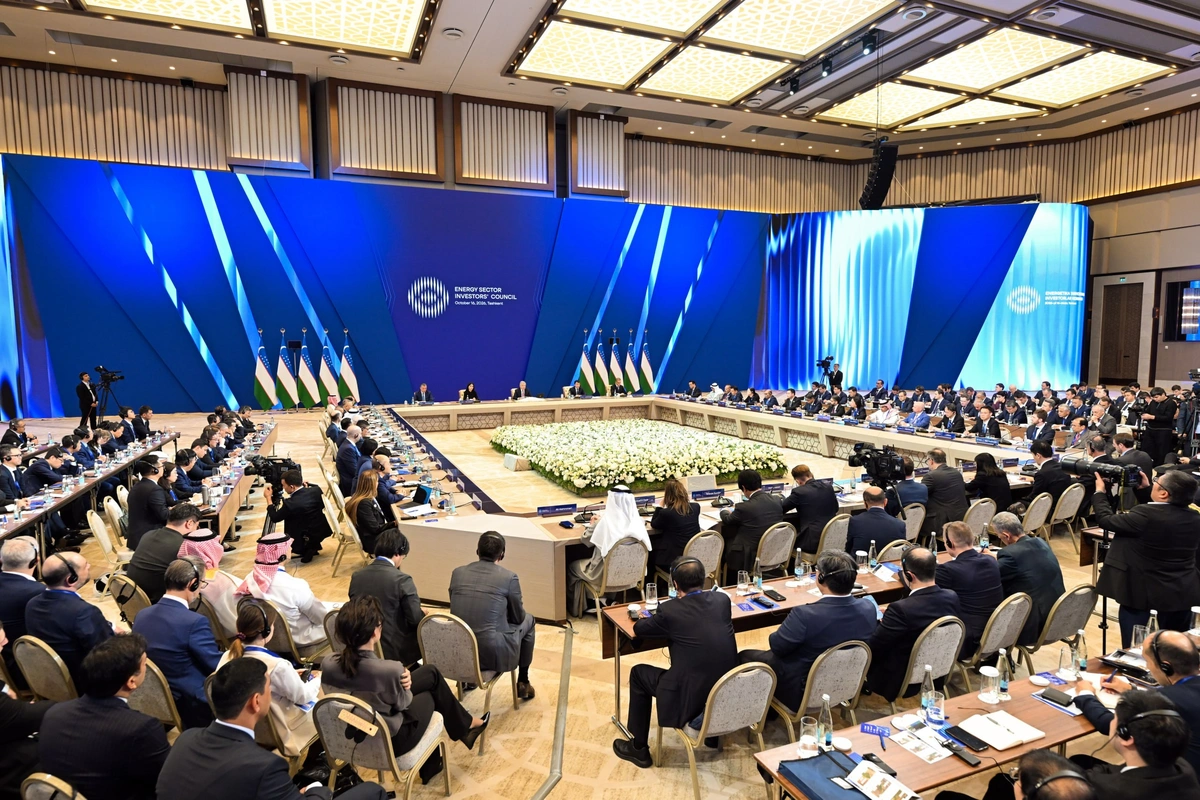
President Shavkat Mirziyoyev has announced 12 industrial localization projects worth a combined $850 million aimed at replacing imported energy equipment with domestically manufactured alternatives, including energy storage control modules, components for wind turbines, and high-voltage apparatus. The announcement came during an open dialogue with investors in the fuel and energy sector, where the president also unveiled plans for a new specialized industrial zone in the Farish district of Jizzakh region to produce goods required for the construction of a nuclear power plant.
The localization drive is framed as an effort to multiply the domestic share of the energy supply chain. Mirziyoyev stated that the volume of locally produced goods in the sector could be increased by three to four times, and directed the Agency for Industrial Cooperation and relevant local associations to identify the precise volume and quality specifications that investors require so that domestic suppliers can meet those standards. Local enterprises were called on to improve their competitiveness on both price and quality.
Current Localization Baseline
The initiative builds on measurable progress already recorded in 2025. The total value of local goods and services consumed by the energy industry that year reached $740 million. One concrete benchmark involves China Energy’s construction of eight battery storage complexes: 40 percent of the materials used in those projects were sourced domestically, with a combined value of $200 million. These figures provide the baseline against which the three-to-four-times expansion target is set.
The broader rationale offered by the president is that rising demand generated by ongoing energy projects — for copper products, cables, transformers, metal structures and construction materials — creates a structural opportunity for local manufacturers if they can match international standards. Mirziyoyev noted that combining foreign investment and advanced technology with domestic resources, industrial capacity and a young workforce could substantially increase the value of those internal assets.
Jizzakh Zone and Nuclear Supply Chain
The most specific new institutional commitment is the creation of a dedicated industrial zone in the Farish district of Jizzakh region. The zone is intended to manufacture goods specifically needed during the construction of a nuclear power plant, a project Uzbekistan has been developing with Russian state nuclear corporation Rosatom. Mirziyoyev invited investors to participate and indicated that tax and customs privileges would be available for those joining the project, though the precise terms of those incentives were not detailed in the announcement.
The localization agenda is linked to the recently articulated O’Z concept, which the president described as centred on developing domestic potential, engaging with the world as an equal partner, and accepting shared responsibility for a common future. The concept has been presented as the economic philosophy underpinning Uzbekistan’s approach to attracting foreign capital while building indigenous industrial capacity rather than remaining a passive recipient of imported equipment and technology.
Related Investment Activity
The $850 million localization package is the largest single announcement in this policy cycle, but it sits alongside other recent moves in the same direction. A Chinese company has separately committed $20 million to establish a factory near Andijan for the production of aggregates used in small hydropower plants, according to earlier reporting by Spot.uz. That project illustrates the model the government is seeking to replicate at greater scale: foreign capital and technology applied to domestic manufacturing for the local energy market.
No timeline was specified for the completion of the 12 localization projects, and the names of the enterprises or consortia that will execute them were not announced. The Industrial Cooperation Agency’s mandate to map investor demand against domestic supply capacity suggests that detailed project assignments remain to be finalised.