
A man named by Radio Ozodlik as the prime suspect in the attempted assassination of Komil Allamjonov — one of Uzbekistan’s most powerful presidential insiders — has been arrested in South Korea and placed on an Interpol red notice, according to two independent sources inside Uzbekistan’s law-enforcement agencies and a Seoul embassy official who declined to deny the detention.
Javlon Yunusov, 36, born in Tashkent, is suspected of attempted premeditated murder, according to the Interpol notice, which lists the charge as grounds for member states to detain him. A source inside Uzbekistan’s security services described his arrest as “an important turning point” in the investigation. Extradition, however, is reported to be stalled: a Seoul-based source familiar with Uzbek elite networks in Korea said efforts are under way to secure Yunusov political asylum rather than return him to Tashkent, with human-rights activists said to have been drawn into the process.
The shooting took place on 26 October in the Kibray district on the outskirts of Tashkent, when a Range Rover was struck by multiple bullets. The General Prosecutor’s Office confirmed the attack in four successive statements but conspicuously omitted Allamjonov’s name from all of them. Ozodlik’s sources identified the vehicle and its occupant; Allamjonov himself has issued no public statement. The following day, two men appeared in a video circulating online and openly claimed responsibility, also offering their own theories about motive. Both were subsequently arrested.
The shooter, Turkey, and a Chechen connection
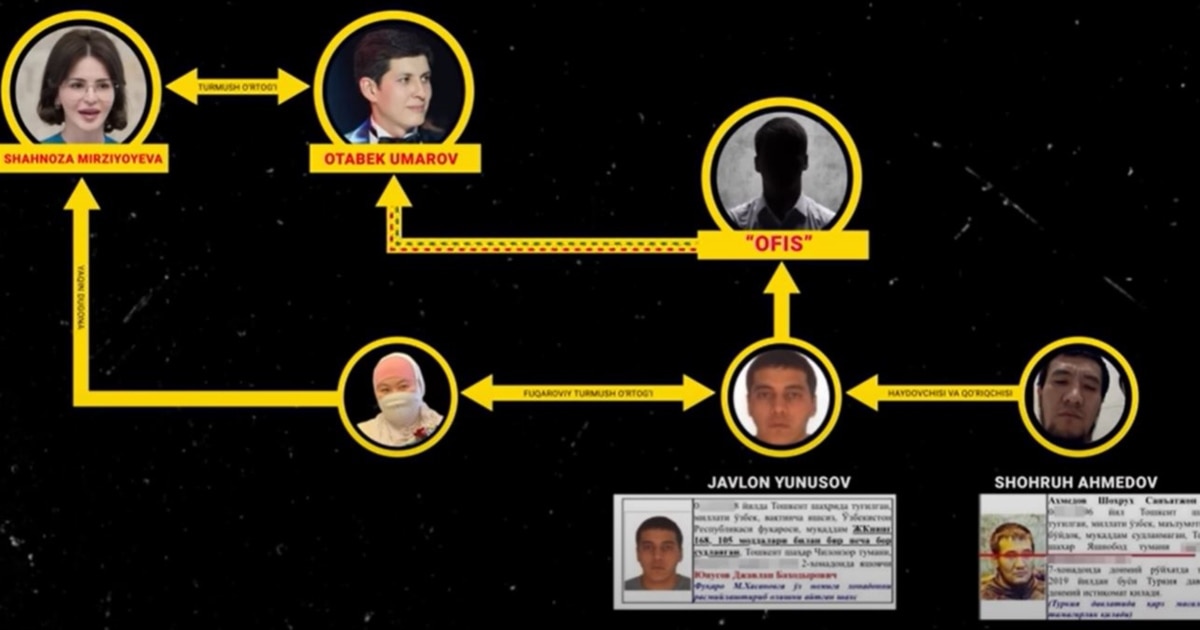
Ozodlik identified one of the two men who confessed on video as Shohrukh Akhmedov, described as Yunusov’s personal bodyguard and driver. After fleeing the scene, Akhmedov and an accomplice were traced to the Fergana Valley; their vehicle was found near a café in Fergana belonging to the family of Natalya Fen, described by sources as Yunusov’s common-law wife. The second man who appeared in the video was identified as Ismoil Karimjonovich Jahongirov, a resident of Tashkent’s Chilonzor district with a prior criminal record.
Akhmedov’s background adds a striking international dimension. Documents in Ozodlik’s possession show he lived in Turkey from 2019 and was involved in debt-collection rackets there. In 2021 he was arrested in Turkey on suspicion of involvement in a plot against critics of Chechen leader Ramzan Kadyrov, spending seven months in detention alongside seven Chechen nationals. Turkish media, which described the affair as a “Russian spy scandal,” reported that the group unexpectedly walked free from the courtroom — a development Turkish outlets attributed to Kadyrov’s personal intervention. A 25-page indictment leaked to Turkish media named the group’s leader as Bislan Rasaev, who allegedly received instructions from Adam Delimkhanov, a Russian State Duma deputy and close ally of Kadyrov. The same investigation linked Rasaev to Kazbek Dukuev, a criminal authority wanted internationally for multiple killings. Turkish reporting identified Akhmedov — known in criminal circles by the nickname “Shokh” — as a close collaborator of Rasaev.
On 10 November, Kadyrov published a Telegram post denying any role in the Allamjonov attack, dismissing coverage as “pro-Western” disinformation and accusing unnamed third parties of trying to drive a wedge between Uzbekistan and Chechnya. He did not address why Akhmedov — arrested in Turkey in connection with a plot linked to Kadyrov’s circle — had subsequently returned freely to Uzbekistan. He also did not explain an unannounced visit he made to Istanbul shortly after the Turkish arrests. His post closed with what read as a warning: “Whatever happens, I and my dear brothers in Uzbekistan will together find out who is behind these slanders. The work has already begun.” Uzbekistan’s authorities have not responded to Kadyrov’s statement.
Yunusov’s business empire and the Fen connection
Public registries show Yunusov as the founder of 18 companies registered in Tashkent, 15 of which remain active. His portfolio spans pharmaceuticals — he is listed as director of IMUN GREEN-PHARMA LLC, founded in January 2022, and holds a 33.2 percent stake in MARXAMAT MED PHARM — as well as construction, grain cultivation, property rental, beer trading under JAVLON IDEAL BIZNES, and fitness clubs under MAX LEATHER PRODUCTION. Sources describe him informally as a curator of Uzbekistan’s pharmaceutical sector. Court records show he has been convicted under articles covering fraud and causing moderate bodily harm, convictions that did not impede his business activity.
In South Korea, Yunusov had business interests including a partnership with a plastics manufacturer in Suwon, and sources say he owns several properties in Seoul. His common-law wife Natalya Fen is the daughter of the late Vitaliy Fen, who served as Uzbekistan’s ambassador to South Korea from 1996 to 2013. Sources say Natalya Fen’s familiarity with Seoul’s networks has complicated extradition efforts. A government source in Tashkent said Fen was summoned for questioning after Ozodlik’s initial investigation but was released after giving a statement.
Sources also allege that Natalya Fen is close to Otabek Umarov, a figure Ozodlik has previously reported on as wielding informal influence across several sectors. According to a government source, Fen organised Umarov’s medical treatment in South Korea after he was injured in an accident, and Umarov later gave her a chocolate-coloured Mercedes-Maybach GLS as a gesture of gratitude. Ozodlik states it holds no documents confirming or refuting the broader allegations linking Yunusov to Umarov’s network. Umarov has not responded to Ozodlik’s previous investigations, and no publicly available evidence connects him or any government official to the Kibray attack.
Seven detained, UZB plates, and a media blackout
Seven people connected to Allamjonov — including his driver, three bodyguards, a secretary, a cook and a bathhouse attendant — were detained on the day of the attack at a café in Kibray and sentenced to 15 days’ administrative detention by the Kibray district court, which charged them with petty hooliganism and failure to comply with police orders. Each was also fined 375,000 soum. A relative of one detainee told Ozodlik they were held without lawyers, subjected to sleep deprivation and stress positions over 24 hours, and pressed for compromising information about Allamjonov’s movements and associates. Ozodlik sought comment from the Kibray district police; an officer said only that written requests were required.
A separate investigative thread concerns the “UZB” prefix licence plates — reserved by law for heads of central government bodies but, according to three independent sources, distributed informally and allegedly controlled by Umarov, who is said to have determined who received them. Sources allege the plates were used to move weapons — believed to have originated in Kyrgyzstan — across the border into the Fergana Valley without police checks, on the basis that vehicles bearing UZB plates are not stopped at checkpoints. On 2 November, a nationwide sweep began reclaiming hundreds of UZB plates from private individuals and companies. The Interior Ministry’s press chief, Shohrukh Ghiyosov, confirmed the operation, attributing it to “abuse” of the series, and denied that the plates had been under Umarov’s control.
Uzbek journalists told Ozodlik they had been summoned individually to the Gvardeyskiy district and warned not to mention Allamjonov’s name at all — not merely the attack. “This is a taboo now,” one journalist said. Allamjonov, who posted a photograph of himself voting in parliamentary elections the day after the shooting, has not spoken publicly about the attempt on his life. The General Prosecutor’s Office has declared a formal information monopoly over the case. President Mirziyoyev is said by a government source to have taken personal oversight of the investigation, though no official confirmation of this has been issued.
