

Listen to the article
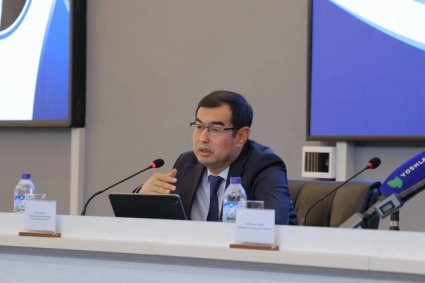
Average monthly electricity consumption per household fell by 28 kWh — roughly 13% — between 2023 and 2025, while natural gas use dropped by 89 cubic metres, or nearly 21%, over the same period. Deputy Minister of Economy and Finance Khurshid Mustafayev disclosed the figures at a press conference on 14 October, attributing the decline to a programme of tariff reforms that replaced broad energy subsidies with volume-based pricing and targeted compensation for low-income families.
Monthly electricity consumption per customer stood at 212 kWh in 2023 and fell to 184 kWh by 2025. Gas consumption moved from 431 to 342 cubic metres per customer over the same two-year span. Mustafayev described the trend as evidence that households are adjusting their behaviour in response to price signals, saying that people are gradually shifting toward saving and energy efficiency and characterising the shift as a positive outcome of the reform.
Why the old subsidy model was abandoned
Jamshid Abruev, deputy director of the National Agency for Social Protection, told the same event that the government’s decision to move away from universal tariff subsidies was driven by evidence that the arrangement was regressive in practice. Household tariffs had been frozen for several years even as the actual cost of producing and delivering energy rose, with the difference covered by the state budget and energy companies. The arrangement was introduced partly as a relief measure during the coronavirus pandemic and the economic recovery period that followed, Abruev said.
Analysis of consumption patterns revealed a pronounced imbalance: customers using more than 200 kWh of electricity per month represent 30% of all household customers yet account for 71% of total residential electricity consumed. Abruev said this meant the subsidy was disproportionately benefiting higher-income households, which tend to run larger homes with more appliances, rather than the lower-income families the support was nominally intended to protect.
How the new tariff structure works
Base consumption norms and volume-based tariffs came into effect on 1 May 2024. Under the framework, each household is allocated a monthly electricity norm of 200 kWh. For gas, the norm is 500 cubic metres per month during the heating season and 100 cubic metres in other months. Consumption within these norms is charged at a lower base rate, while use above the threshold attracts a higher tier.
Tariffs were revised again on 1 June 2026. Under the current schedule, electricity costs 650 soums per kWh for the first 200 kWh and 900 soums per kWh for consumption between 201 and 500 kWh. Gas within the base norm is priced at 1,100 soums per cubic metre.
Targeted support for low-income households
To offset the impact of higher tariffs on vulnerable families, the government introduced a compensation mechanism under which low-income households receive support covering the difference between the base and higher-tier rates on their additional consumption. Abruev said approximately 470,000 families had used the scheme over the preceding eighteen months, with a total of 156 billion soums allocated for that purpose.
The shift from universal subsidies to differentiated tariffs combined with targeted transfers represents a significant structural change in how the state supports household energy costs. Officials presented the consumption data as early evidence that the reform is producing the intended efficiency effect, though the figures cover the period up to 2025 and more recent data reflecting the June 2026 tariff revision were not provided at the event.