


Healthcare and education have been identified as the sectors where women in Uzbekistan face the greatest exposure to corruption, according to a new study presented at a Tashkent roundtable on 25 May 2026. The research, titled Gender and Corruption in Uzbekistan: Towards Transformational Change, was conducted by the United Nations Development Programme in partnership with the Anti-Corruption Agency and funded by the European Union.
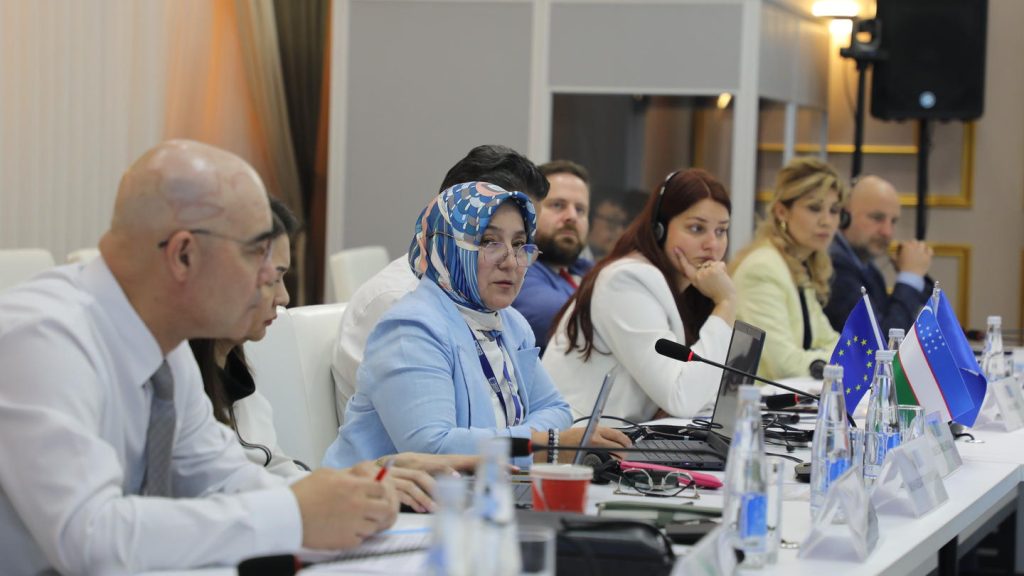
The roundtable brought together representatives of government institutions, civil society organisations, academia, the media, and international partners to discuss the study’s findings and policy implications. The event was organised under the joint project Strengthening the National Anti-Corruption Ecosystem in Uzbekistan, which is co-implemented by the Anti-Corruption Agency and UNDP with EU financial support.
Survey Findings: Sector Vulnerabilities
The study drew on both qualitative and quantitative methods. A sociological survey covered 539 respondents — 268 women and 271 men — and was complemented by 10 focus group discussions conducted across several regions of the country. Researchers also analysed international policy documents and Uzbekistan’s existing legal framework.
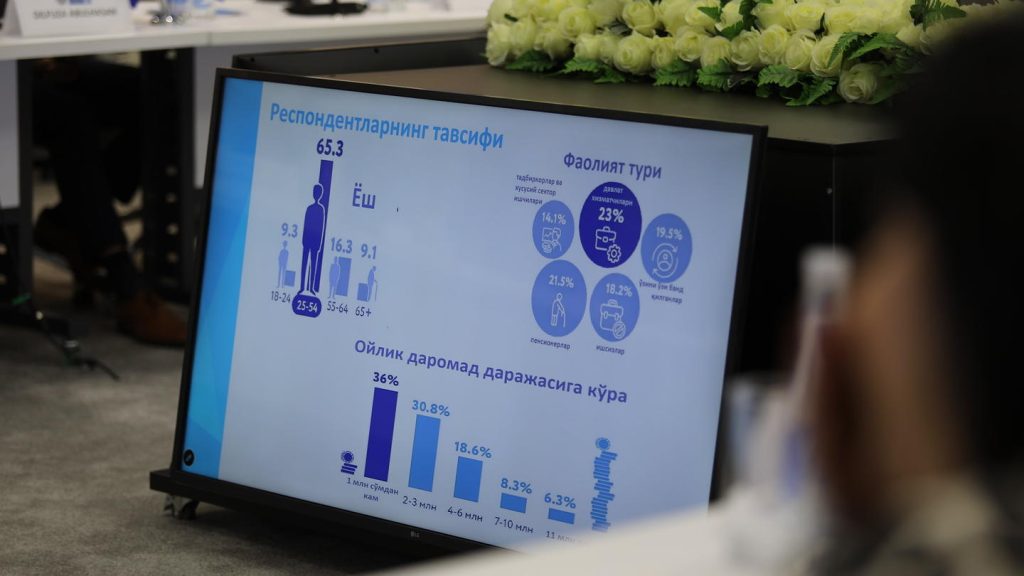
More than half of all respondents — 54.4% — identified healthcare as the sector where women are most vulnerable to corruption. Education ranked second, cited by 28.4% of participants. The study noted that women’s heightened exposure in these areas is closely connected to their caregiving roles: navigating healthcare systems for family members and managing children’s access to education places them in repeated contact with sectors where informal payments and preferential treatment are reported to occur.
Informal Norms and Social Practices
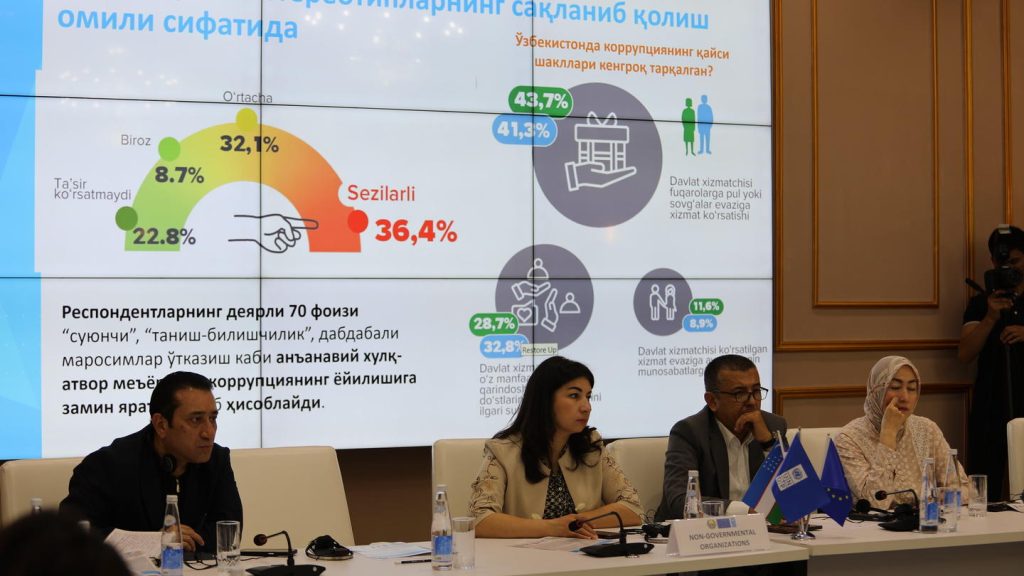
One of the study’s central findings concerns the role of deeply embedded social customs in sustaining corrupt behaviour. Nearly 70% of respondents stated that practices such as suyunchi — gifts given to bearers of good news — tanish-bilish, the use of personal connections and networks, and expectations around expensive social ceremonies all contribute to the spread of corruption. The research concludes that corruption in Uzbekistan is rooted not only in institutional weaknesses but also in widely accepted social behaviours that normalise the exchange of favours and informal payments.
Sextortion: A Recognised but Under-Reported Risk
The study also examined sexual extortion — internationally referred to as sextortion — as a gender-specific form of corruption. Respondents broadly perceived women in Uzbekistan as vulnerable to this form of abuse. However, the research found that shame, fear of social stigma, and limited legal awareness remain significant barriers that prevent victims from coming forward. The authors argue that these barriers point to the need for safer, more accessible, and gender-sensitive reporting and protection mechanisms.
Among its legislative recommendations, the study explicitly calls for sextortion to be recognised as a corruption-related offence within the national legal framework — a step that would bring Uzbekistan’s legislation into closer alignment with emerging international standards on gender and anti-corruption.
Legislative Gaps and Policy Recommendations
The study’s assessment of Uzbekistan’s anti-corruption legislation found that, while the national legal framework generally aligns with core international standards, gender-sensitive approaches remain insufficiently reflected in both the legislation itself and in how policies are implemented in practice.
To address these gaps, the research proposes a range of measures: integrating gender-sensitive approaches into anti-corruption laws and policies; improving coordination between institutions responsible for anti-corruption work and gender equality; raising public awareness and legal literacy; tackling harmful social stereotypes; expanding women’s economic opportunities; and creating safer mechanisms for reporting corruption and sexual extortion.
The study’s authors note that its contents reflect the views of the researchers and do not represent the official positions of the Government of Uzbekistan, UNDP, or the European Union.
