


Listen to the article
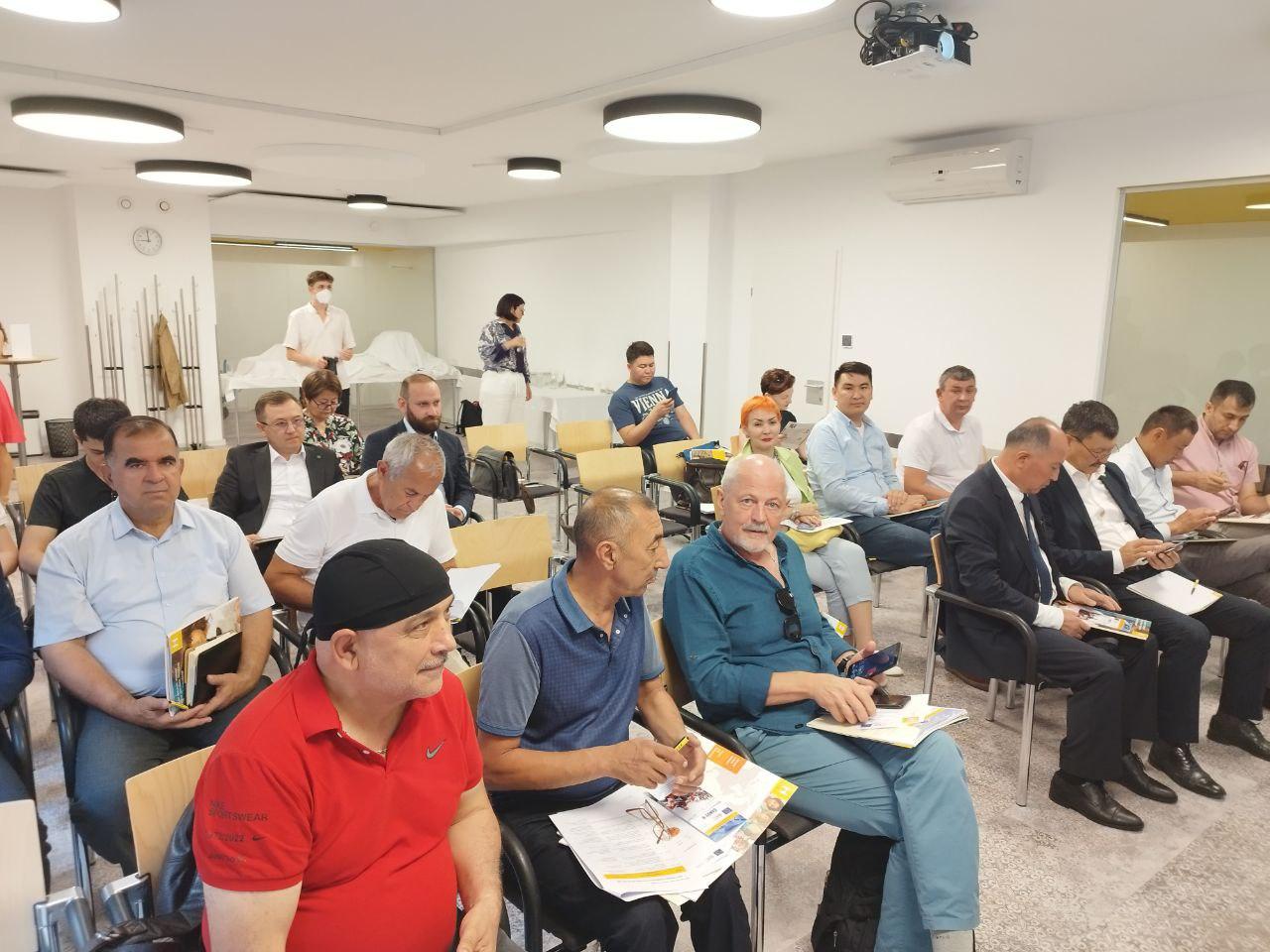
Twenty-four representatives from Kazakhstan, Kyrgyzstan, Tajikistan and Uzbekistan gathered in Vienna in early July 2022 for a study tour focused on two tools that European producers have used to raise the commercial standing of their agricultural goods: agro-industrial clustering and Geographical Indications. The visit was organised to expose Central Asian government officials, industry associations, producers and exporters to the institutional arrangements that underpin EU farm competitiveness.
The tour was organised by the CANDY V consortium, led by the Austrian international organisation Hilfswerk International, under the project Regional Integration and Capacity Building to Boost Agribusiness MSMEs Competitiveness and Trade Promotion in Central Asia. Funding came from the European Union’s Central Asia – Invest V programme and the Austrian Development Agency, alongside the UNDP Regional Project Aid for Trade for Central Asia, which is financed by the Government of Finland.
Why Clustering and Geographical Indications
Central Asian governments have devoted increasing attention to agricultural clustering over recent years, seeking to secure the output volumes, commercial quality and food safety standards that export markets demand. The logic of clustering — grouping producers, processors, exporters, research institutions and support services into coordinated networks — is seen as a way to meet those requirements at scale.
Geographical Indications add a complementary dimension. By formally linking a product to its place of origin, traditional production methods and specific local characteristics, a GI designation allows producers to differentiate their goods in national, regional and international markets and, in principle, to command a premium. Central Asian countries have been exploring GI frameworks in part because the region’s agricultural heritage — particular varieties of fruit, nuts, cotton and other commodities tied to specific valleys or microclimates — offers a natural basis for such branding. Interdepartmental national working groups on agro-clusters and GIs, involving the private sector, have been established across the region to build the necessary institutional conditions.
The Central Asian Working Group
The broader regional coordination effort operates through the Central Asian Working Group (CAWG), an initiative that originated with the business community before receiving formal backing from state standardisation bodies and export agencies in the participating countries. Producers, processors and exporters hold a central place in the CAWG’s structure, alongside industry associations — a design intended to keep commercial realities at the centre of policy development rather than leaving reform to government ministries alone.

What the Delegation Studied in Austria
The Austrian programme covered the architecture of the country’s agro-industrial cluster policy, including national support programmes and the development of the Austrian Agricultural Cluster (AAC). Participants examined how Austria structures the interaction between scientific research, higher education and commercial agriculture within cluster arrangements — a linkage that is often cited as a driver of product quality and innovation in European farm sectors.
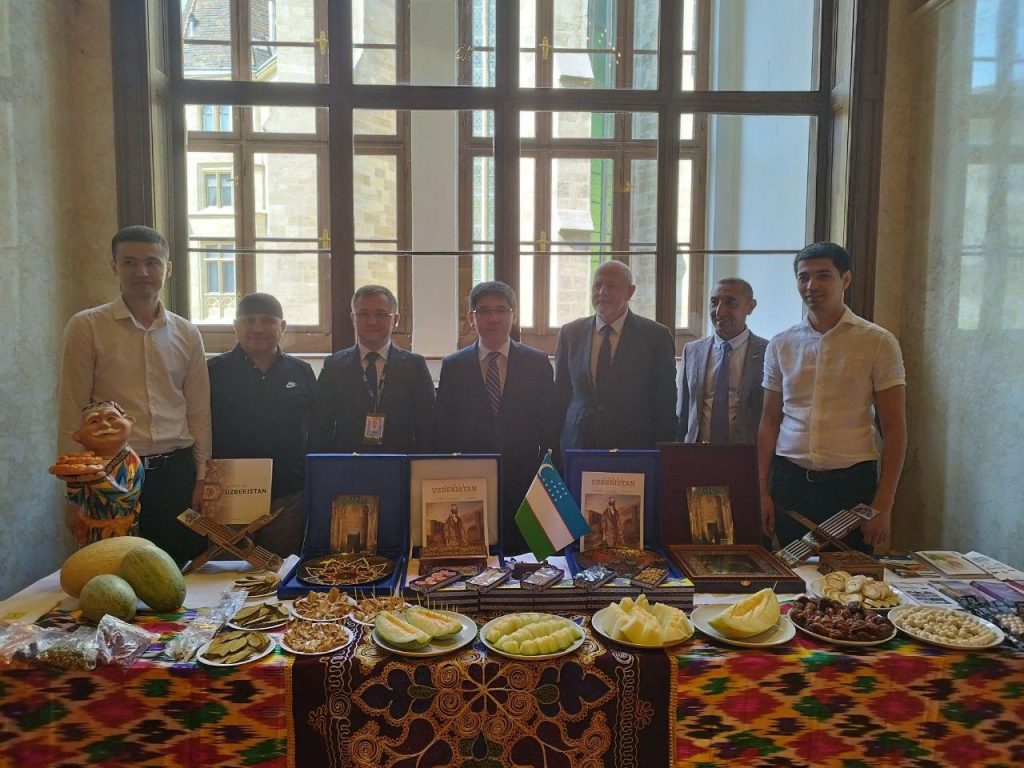
On the GI side, the delegation reviewed Austria’s policy framework for branding and product individualisation, the role that producer organisations play in managing and defending GI designations, and the mechanisms through which GIs support rural development and agricultural export promotion. The programme also included preparation for a showcase event designed to promote Central Asian agricultural exports to EU buyers.
Policy Context for Uzbekistan
For Uzbekistan, the study tour sits within a wider government effort to modernise the agricultural sector and diversify export revenues. The country’s farm sector produces a range of goods — including fruits, vegetables, nuts and cotton — that could in principle qualify for GI protection based on regional origin and traditional methods. However, the evidence from the tour does not identify which specific Uzbek products are being considered for GI registration, nor does it set out a concrete implementation timeline for adopting Austrian-style cluster structures within the country’s existing agribusiness framework.
The involvement of state standardisation bodies and export agencies from across Central Asia suggests that any GI or cluster framework developed through the CAWG process would require coordinated regulatory action at the national level in each country. The UNDP’s parallel engagement through its Aid for Trade project, funded by Finland, adds a multilateral development dimension to what began as a business-community initiative.