

Listen to the article
Batyr Ikramjanovich Rakhimov, the Tashkent-based businessman formerly known as the owner of Pakhtakor football club and the Uzbekistan Hotel, re-emerged in Uzbek public life in early 2021 in an unexpected role: as an informal intermediary between the Uzbek government and the exiled opposition party Erk, according to reporting by Radio Ozodlik (RFE/RL’s Uzbek service) published in April of that year. The account is partly corroborated by Erk’s own leader, Muhammad Salih, who confirmed the meetings and provided the text of a letter he handed to Rakhimov.
The Envoy and the Letter
Muhammad Salih, who has lived in Turkey and leads the Erk Democratic Party—banned in Uzbekistan and designated a terrorist organisation under the previous government—told Ozodlik that Rakhimov approached him multiple times requesting a meeting. Salih said he agreed only after receiving what he described as confirmation that Rakhimov genuinely represented the Uzbek government. At the meeting, held in February 2021, Salih handed Rakhimov a written document titled “Towards Goodness.”
The letter, which Ozodlik reviewed, contained both offers and conditions. Salih offered that the opposition would support a peaceful election environment and social stability, mobilise diaspora networks to attract Western and Eastern investment, and use his political standing to raise the international profile of President Shavkat Mirziyoyev. The letter stated these services would be rendered not for personal office or financial reward but “for the nation’s future.” In return, Salih set two conditions: that all criminal charges against him be dropped, his citizenship restored and his return to Uzbekistan guaranteed; and that the Erk party be granted legal registration.
Salih told Ozodlik that in the two months since sending the letter, none of his conditions had been met. Rakhimov had not responded publicly, and Ozodlik reported it was unable to obtain his comment.
A Tashkent Official’s Account
A Tashkent government official who spoke to Ozodlik on condition of anonymity offered a more pointed interpretation. The official said that Rakhimov—described as someone with alleged criminal-world associations who had his assets seized during the Karimov era—had, by entering the opposition’s “stronghold and returning with a document,” raised his standing with the current authorities. The official suggested that Rakhimov had been given not only a green light for business activity but possibly “a specific political role” in connection with presidential elections. These characterisations are the official’s opinion and are not independently verified.
Family Connection to the Presidential Household
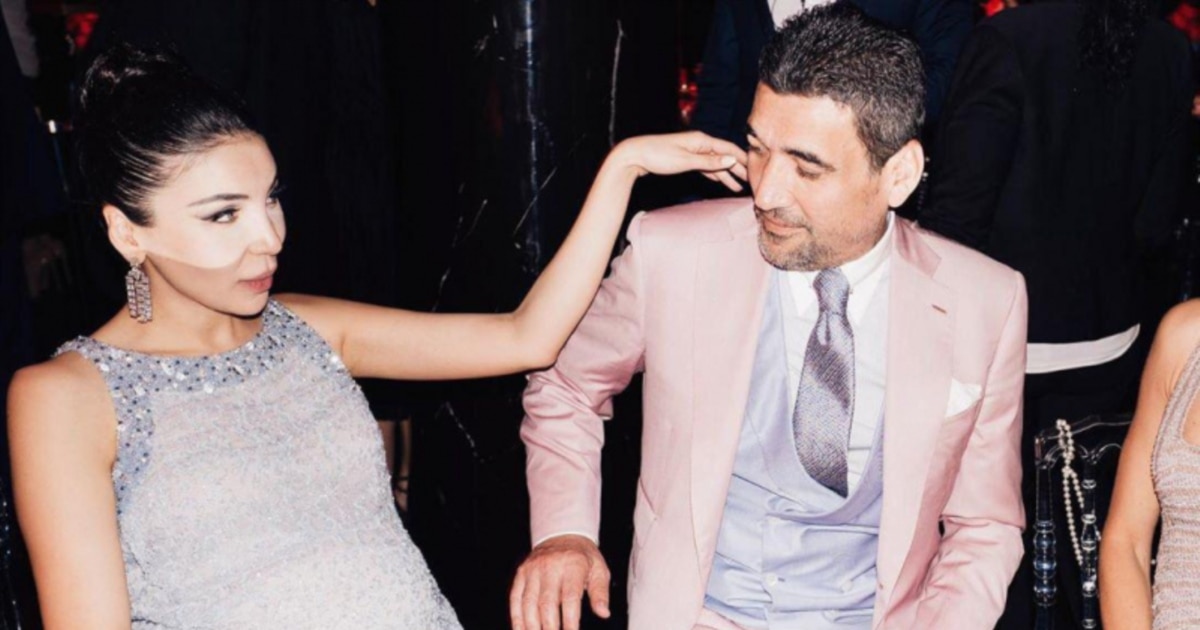
Rakhimov’s proximity to the Mirziyoyev family is documented. In 2016 he married Diyora Usmonova, a niece of First Lady Ziroatkhon Mirziyoyeva and the widow of Bobur Usmonov—a nephew of billionaire Alisher Usmonov who died in a Tashkent road accident in 2013. The couple announced the birth of a son in 2017. In October 2020, Rakhimov and Usmonova appeared together at the Tashkent premiere of the film “Mendirman Jaloliddin,” presented by the president’s eldest daughter Saida Mirziyoyeva. Ozodlik also reported holding a photograph of Rakhimov alongside Oybek Tursunov, the president’s son-in-law.
In November 2020, Diyora Usmonova wrote on Instagram about the couple’s relationship, acknowledging that they had “gone through much” and that she had “crossed all her principles, fears, beliefs and rules” and done things she had previously condemned, adding: “I understand those who cannot accept us. We could not find the strength to live without each other.”
Background: Detention, Business Empire and a Swedish Prosecution File
Rakhimov, born in Kokand into a large family, built a holding company called Kapital that included Kapitalbank, an insurance company and a non-ferrous metals mining operation. He was the president of Pakhtakor FC and owner of the Uzbekistan Hotel in Tashkent. In spring 2010 he was reportedly detained by Uzbek law-enforcement authorities; the details of that detention remain undisclosed. A large-scale audit of Kapitalbank followed the reports of his arrest.
A separate document from Swedish prosecutors, cited by Ozodlik, adds a distinct dimension. According to that record, in February 2012 Rustam Kupaysinov—listed as general director of Pakhtakor FC, of which Rakhimov was president—wrote an official letter of support to help a man named Yuriy Zhukovskiy obtain a Schengen visa. Zhukovskiy was subsequently charged in Sweden with shooting an Uzbek imam in the town of Strömsund. The nature of Rakhimov’s personal knowledge of or involvement in that visa request is not established by the source.
After the death of President Islam Karimov in 2016, restrictions on the public participation of businessmen with alleged criminal-world ties were relaxed. Ozodlik noted that Salim Abduvaliyev—widely described in that context—was appointed deputy chairman of the National Olympic Committee in January 2017, and that Gafur Rakhimov, subject to US sanctions and an international warrant, returned to Uzbekistan shortly after Mirziyoyev assumed the presidency. The report positions Batyr Rakhimov’s rehabilitation within this broader pattern, though the parallel is drawn editorially rather than through official documentation.
Unresolved Questions
The source leaves several material questions open. It is not established whether Rakhimov acted with any formal or informal government mandate, or whether the Uzbek authorities ever responded to Salih’s letter. The basis and outcome of the 2010 detention have never been made public. The extent of Rakhimov’s current business interests in Uzbekistan is not documented in this report. His own account of the meetings with Salih, his role as described by the Tashkent official, and the Swedish visa-letter episode have not been addressed by him on the record.