

Listen to the article
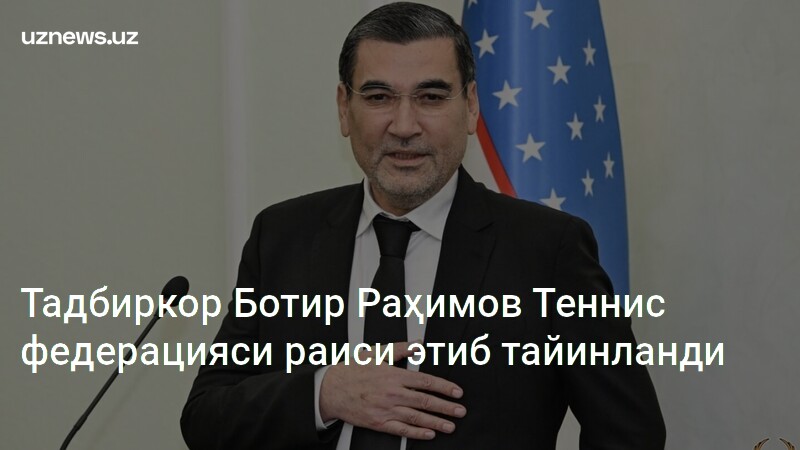
Batyr Rakhimov, a businessman and sports administrator best known for his long tenure as president of the Pakhtakor football club, was unanimously elected chairman of the Uzbekistan Tennis Federation on 17 February 2025 at an extraordinary electoral conference convened at the National Olympic Committee.
A Leadership Transition at the National Olympic Committee
The conference was called out of the regular schedule to address a single organisational matter: the vacancy created when the federation’s previous chairman, Alisher Mirsоatov—who concurrently serves as board chairman of the joint-stock company Uzмilliybank—stepped down to take charge of the Winter Sports Association. The session proceeded swiftly, with delegates advancing Rakhimov’s candidacy and approving it without dissent.
The speed and unanimity of the vote are consistent with the way leadership transitions in Uzbekistan’s national sports federations are typically managed, where candidates are generally presented to conferences after prior consultations rather than through open competitive nomination processes. The source does not indicate whether other candidates were considered or whether the nomination was discussed in advance with the National Olympic Committee, which hosts such conferences and exercises oversight over affiliated federations.
Rakhimov’s Background and the Governance Question
Rakhimov’s public profile is rooted in football administration rather than tennis. His years leading Pakhtakor—Uzbekistan’s most prominent football club and a state-connected institution—placed him at the intersection of business, sport and public life. The source describes him as an entrepreneur and specialist, but does not detail his specific business interests, the nature of his connection to Pakhtakor’s ownership or funding structure, or any prior involvement in tennis.
The appointment of business figures with no direct background in a given sport to lead national federations is a recurring governance pattern in Central Asian sports administration. Such arrangements raise standard questions about the basis for selection, the federation’s funding sources and any commercial interests the incoming chairman may bring to the role—questions the source does not address.
What the Record Shows and What Remains Open
What is established: Rakhimov was elected chairman of the Uzbekistan Tennis Federation on 17 February 2025 by unanimous vote at an extraordinary conference; his predecessor Mirsоatov left to lead the Winter Sports Association; and Rakhimov’s prior public role was as Pakhtakor club president. What is not established by the available source: the terms of his mandate, any declared conflicts of interest, the federation’s financial position, or whether his business activities intersect with the federation’s sponsors or partners.
No statement from Rakhimov himself, nor any response from the federation or the National Olympic Committee, is included in the source material. The report does not allege any impropriety; it records a leadership change at a national sporting body that places a prominent business figure in a new position of institutional responsibility.