


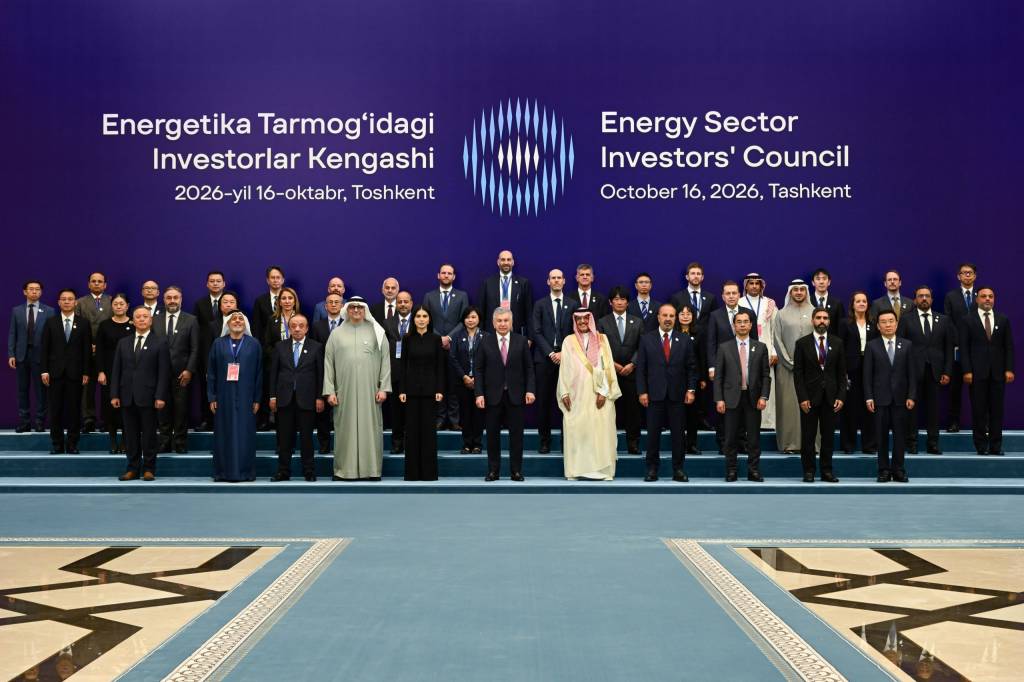
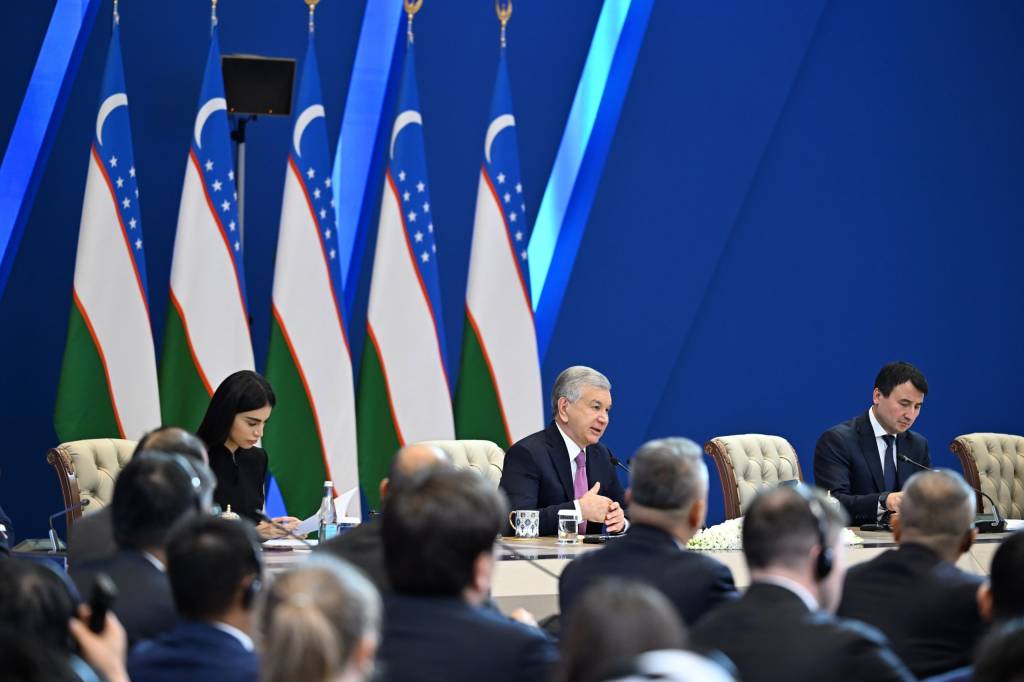
Six major energy projects worth a combined $4.7 billion were signed at a meeting chaired by President Shavkat Mirziyoyev on 16 October, adding 3,000 megawatts of generation capacity and 400 megawatts of energy storage to the national grid. The agreements came alongside a series of structural commitments that officials described as the opening of a new investment phase for the sector.
Mirziyoyev set out a revised standard for future projects, stating that new investments must not only expand generation but also improve supply reliability and reduce transmission losses — a shift in emphasis from raw capacity additions toward system quality. The government’s headline target is to add 22,000 megawatts of new generation capacity by 2030, raise annual electricity output to more than 129 billion kilowatt-hours, and increase the share of renewables from the current 31 percent to 54 percent.
First National Energy Master Plan
For the first time, the government will develop and publish a National Energy Master Plan covering the period through 2050. A map of available grid connection opportunities is to be released by 1 March next year, with the full master plan to follow by 1 July. Officials said the document is intended to give investors greater clarity and predictability for long-term project planning — a concern that has repeatedly surfaced in discussions with the private sector.
To complement the master plan, energy capacity requirements will be assessed in advance for each region, and fully prepared projects will be offered through open, competitive tenders. Investors will receive upfront information on land allocation, grid connections, and electricity purchase terms. Six solar and wind projects with a combined capacity of 2,200 megawatts are to be put out to tender in the near future.
Investors Council to Cut Bureaucratic Delays
Investors at the meeting proposed establishing a permanent dialogue mechanism to resolve recurring problems with land allocation, grid connections, and technical approvals. In response, Mirziyoyev announced the creation of an Energy Sector Investors Council to be chaired by the Head of the Presidential Administration. The council is tasked with resolving issues at every stage of project implementation, from initial preparation through facility commissioning.
Grid Expansion and Storage

Alongside generation targets, the government outlined a substantial infrastructure programme. By 2030, plans call for the construction of 5,000 kilometres of new power lines and 16 major substations, and for total energy storage capacity to reach 4.5 gigawatts. Mirziyoyev specifically highlighted the growing energy demands of industrial enterprises and data centres as a driver of this infrastructure push.
The meeting also addressed expanding private-sector participation in electricity distribution networks and modernising public facilities and pumping stations using energy-efficient technologies. New mechanisms are planned to allow green energy producers to generate additional revenue through the sale of certificates and carbon credits.
Industrial Localisation and Oil and Gas
Mirziyoyev stressed that investment projects must create openings for domestic industry. Twelve projects totalling $850 million have been prepared to localise production of high-voltage equipment, energy storage systems, and wind turbine components. A dedicated industrial zone is also planned to manufacture equipment and materials for the nuclear power plant under construction in Forish district.

In the oil and gas sector, the meeting covered expanded cooperation in geological exploration on the Ustyurt Plateau, where six investment blocks are already being developed in partnership with SOCAR and British Petroleum. A further 128 blocks have been prepared for potential foreign investors. Separately, plans were presented to implement a Methanol-to-Olefins project in Bukhara region and to modernise the Bukhara and Fergana oil refineries.
Workforce Development
Mirziyoyev proposed expanding investor involvement in training specialists for new energy facilities. Beginning with the next academic year, university enrolment quotas in energy-related fields will increase, and government grants will support 50 young people annually to study at leading universities abroad.
The sector has attracted $35 billion in investment over the past decade through private investment and public-private partnership mechanisms. Renewables — solar, wind, and hydropower — now account for 31 percent of total electricity generation, a base from which the government is seeking to nearly double the renewable share within four years.
